
Custom Injection MoldManufacturing
Our injection mold manufacturing services deliver prototype and production tooling, including Class 101 and high-cavitation molds, built for tight tolerances, long tool life, and consistent parts.
Model loading
Our injection mold manufacturing
From tooling release to final inspection, every mold is built under a documented process within our ISO 9001:2015 certified quality system. Our precision plastic injection molding manufacturing scope covers multi-cavity, family, insert, and overmolding tools, with precision VMC machining and ECN implementation.
Nothing leaves the floor between machining and first shot,so a correction is a walk across the shop rather than a week in transit.
- ISO 9001:2015 Certified
- In-House Mold Manufacturing
- Class 101 & High-Cavitation Tools
- Prototype to Production
What Is Injection Mold Manufacturing?
Injection mold manufacturing is the process of building the steel tooling that shapes molten plastic into finished parts. The mold is machined from the approved part design, with cavity and core geometry, gating, and cooling channels built to specification. Prototype tooling supports design validation and low-volume runs, while production tools such as Class 101, multi-cavity, family, insert, and overmolding molds support sustained high-volume output. Tool and die manufacturing of this kind depends on precision VMC machining and controlled engineering change implementation to hold dimensional accuracy across the life of the tool.
What We Offer
As a plastic mould manufacturer, our mold manufacturing services cover production tooling, precision machining, and engineering change implementation for injection molding programs.
Class 101 & High-Cavitation Molds
Durable production tooling for sustained high-volume output, with cavity counts matched to the part and volume.
Multi-Cavity & Family Molds
Tools that produce multiple identical parts, or several related parts, in a single molding cycle.
Insert & Overmolding Tools
Tooling that locates inserts or molds a second material over a substrate within one part.
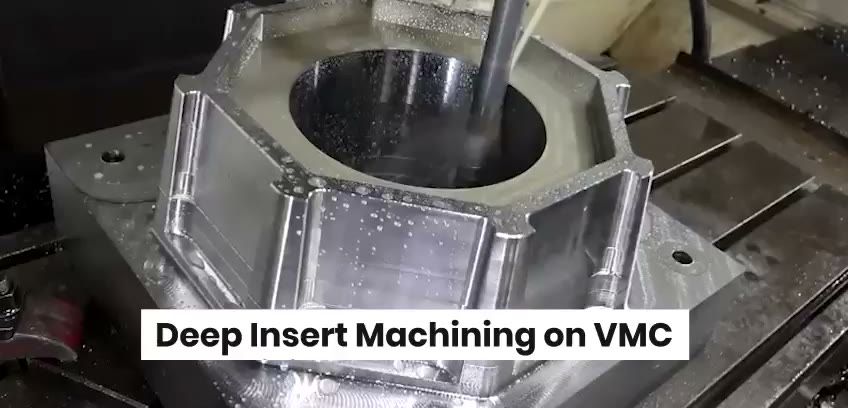
VMC & Precision Insert Machining
Vertical machining center work on cavities, cores, and inserts, machined to specified tolerances.
ECN Implementation
Design revisions are applied to existing molds in line with the approved engineering change notice.
Prototype Tooling
Lower-volume tools for design validation and pilot runs before production tooling is committed.
Product Details
- Tool steels
- 1.2311
- 1.2738
- 1.2738-HH
- 1.2344
- 1.2083
- 1.2767
- 420 SS
- Machines
- CNC milling
- Sinker EDM
- Wire-cut
- Surface grinding
| Parameters | Metric | Imperial |
|---|---|---|
| Mold size | 150 - 900 mm | 6 - 35 in |
| Steel hardness | 28 - 54 HRC | 28 - 54 HRC |
| Machining tolerance | ± 0.01 mm | ± 0.0004 in |
| Cavity count | 1 - 32 | 1 - 32 |
| Tool lead time | 4 - 8 weeks | 4 - 8 weeks |
| Guaranteed shots | 100k - 2M | 100k - 2M |
Our Process
Requirements Review
We review the part CAD, material, and production volume to define the mold specification.
DFM & Mold Design
Part moldability is confirmed, then the 3D mold design is developed with gating, cooling, and ejection systems.
Steel Selection & Preparation
Mold steel and mold base are selected for the production volume and prepared for machining.
Precision Machining
Cavities, cores, and inserts are machined on VMC equipment to the specified tolerances.
Fitting & Assembly
Components are fitted, polished, and assembled, and moving parts and cooling circuits are checked.
Mold Trial & Sample Inspection
T0/T1 trials are run, and the samples are inspected against the part drawing.
Approval & ECN Implementation
The mold is released after sample approval, and later design changes are applied under the engineering change notice.
What Our Clients Say
Radiant delivered precision-engineered tooling solutions that met our component requirements and quality expectations. Their technical expertise and attention to detail made the collaboration seamless.
 An automotive component manufacturing company
They demonstrated strong technical capabilities in mold development and manufacturing. Their structured approach to project execution and focus on quality helped us meet our production requirements.
 A US-based automation company
We came to Radiant with just a rough concept. Their team caught two design issues before we even cut steel, which saved us a full redesign cycle later. The mold ran clean on the first trial.
 Arjun RameshHead of Product Engineering, automotive components
What stood out was having design and manufacturing under one roof. No back-and-forth between vendors, no surprises at production. Parts shipped exactly on the date we were quoted.
 Michael ReedOperations Director, industrial equipment
Industries
Tools we have built
Injection mold design / 2026
We work with a diverse range of industries, providing tailored solutions for design, prototyping and manufacturing needs.
View more projectsFrequently Asked Questions
How much does an injection mold cost?
Cost depends on part size, complexity, cavity count, mold material, and expected volume. Send your part CAD for a project-specific quote.
How long does it take to make an injection mold?
Lead time depends on mold complexity and cavity count. We confirm the timeline when we quote your part.
What is the difference between prototype tooling and production tooling?
Prototype tooling suits design validation and low-volume runs. Production tooling is built for sustained high-volume output.
What is a Class 101 mold?
Class 101 is the top SPI mold class, built for very high-volume production. It describes tool life, not cavity count.
What do I need to send for a custom mold manufacturing quote?
Send the part CAD file, material, and expected annual volume. Tolerances and any insert or overmolding needs also help.